
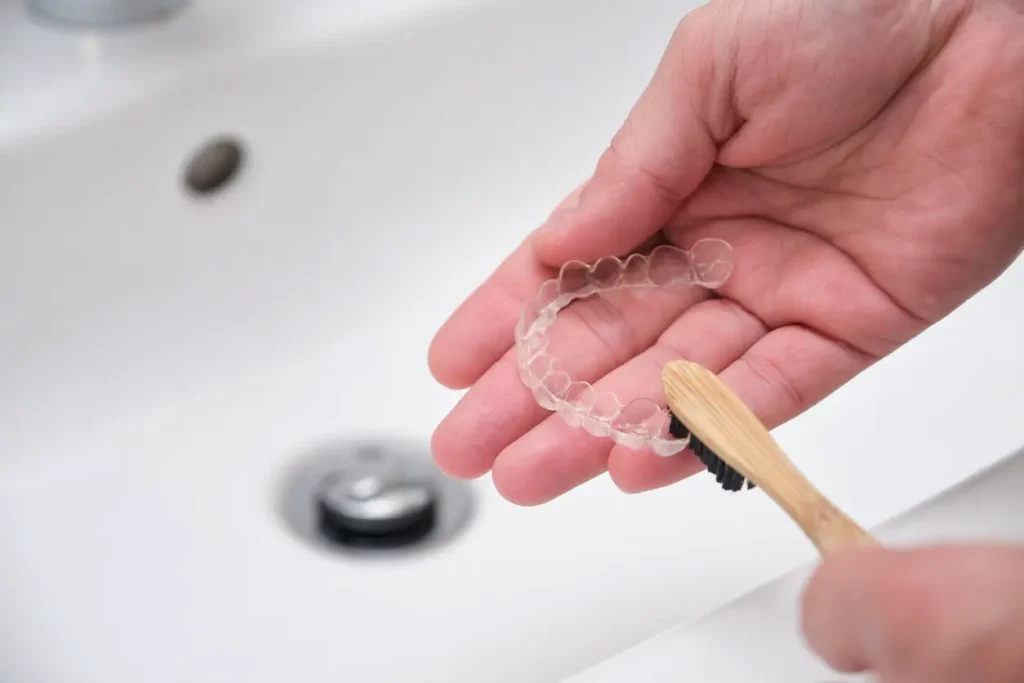
Starting Invisalign® treatment comes with a lot of new rules about eating, drinking, and cleaning. One of the first questions we hear is, “Do I really have to brush my teeth every single time I eat?”
When removing your aligners to eat, brushing afterwards is ideal. Real life is messy, though, and there are smart ways to protect your teeth and aligners when brushing is not possible.
With traditional braces, your saliva can still move around your teeth a bit, even though food gets stuck in brackets and wires.
Invisalign aligners fit snugly over your teeth and act like a clear cover. If you put them back in while food and sugars are still on your teeth, you trap that layer against the enamel. Over time, that can:
Increase your risk of cavities and gum irritation
Lead to bad breath
Make your aligners look cloudy or stained.
That is why many orthodontists recommend brushing after you eat, whenever possible.
In a perfect world, your Invisalign routine would look like this:
Brushing before you reinsert your aligners clears away food and bacteria, lowers your cavity risk, and helps your trays stay clear and fresh.
If you’re in a situation where brushing after you eat isn’t a possibility, you can use this backup plan:
While brushing immediately afterward should always be the goal, this is much better than just putting them back on without any rinsing.
Whether you’re at school, work, or out with friends, there may be times when you can’t brush your teeth right away. In this case, you can use this backup plan:
If your teeth feel coated, sticky, or “fuzzy” after eating, treat that as a brushing moment whenever you can.
Here is a realistic day that works for many patients:
Our team wants Invisalign to feel doable, not overwhelming. A few small habits can make a big difference:
If you play sports, have a tight work schedule, or have questions about your routine, tell us. We can help you plan around your day.
Every patient, schedule, and smile is different. At Joy of Orthodontics, we are here to help you find a brushing routine that protects your teeth and keeps your Invisalign treatment moving smoothly.
If you are thinking about Invisalign or are already in treatment and want personalized tips, reach out to schedule a complimentary consultation or ask us your questions. We are always happy to help.
No. You should always remove aligners for meals and snacks. Only plain water is safe with aligners in.
Occasionally skipping a brushing is normal. Making it a habit can lead to cavities, gum issues, bad breath, and stained aligners. Aim for better, not perfect, and talk with us if you are struggling.
We recommend flossing at least twice a day, in the morning and at night. If food is stuck between your teeth after a meal, floss then too.